Behind Santa’s Christmas Magic: Happy Holidays from EACOMM!

What the North Pole Can Teach Us About Custom Software Every December, Santa runs the most demanding logistics and workflow operation imaginable, while the world marvels at the magic of Christmas. Billions of wish lists. Millions of toys. One global overnight delivery window. And zero room for delays. Sure, flying reindeer, teleporting chimneys, and tireless Christmas Elves give Santa an advantage most business leaders could only dream of, but even with all that magic, the Santa operation is essentially a massive enterprise workflow ready to collapse under its own peppermint-scented pressure. And big operations need big systems. At EACOMM, our mission has always been simple: deliver innovative, fully customized solutions for unique business process challenges. And really, what could be more unique than Santa’s annual logistics nightmare? Our latest holiday video short may playfully imagine Santa using dashboards, automated workflows, and real-time “naughty vs. nice” analytics, but the challenges faced by Santa and his Elves are not all that different from what many organizations confront daily: And year after year, we see companies shelve transformational projects, not because they are not valuable, but because the thought of deep analysis, proper scoping, and finding the right development partner feels overwhelming. This is where EACOMM steps in. Our team of award-winning project managers, business analysts, and software architects does more than just write code.We diagnose, design, and solve. With decades, not just years, of experience, we have built custom solutions across industries, technologies, and project scales. We have seen what works, what fails, and most importantly, why. When you work with EACOMM, you are not just hiring developers. You are partnering with systems thinkers, problem solvers, and technology strategists who understand that no two businesses (or North Pole workshops) are ever exactly alike. Santa may rely on magic, but businesses rely on expertise.Custom software systems designed with precision, built with care, and aligned with real-world processes are often the key to achieving breakthrough performance. And as we look toward a new year filled with fresh challenges and even bigger opportunities, we are reminded that every organization, much like Santa’s bustling workshop, thrives when the right tools and the right team come together. Whether you are solving holiday-scale logistics or simply aiming to make your operations smoother and smarter, the right custom solution can make all the difference. Wishing You Warmth, Magic, and Momentum As we wrap up another year of innovation, creativity, and collaboration, we extend our heartfelt gratitude to all our clients, partners, and friends. From all of us at EACOMM:Happy Holidays and our Best Wishes for a Prosperous, Joyful, and Inspiring 2026!
The Truth About Vibe Coding (AI-Assisted Programming)

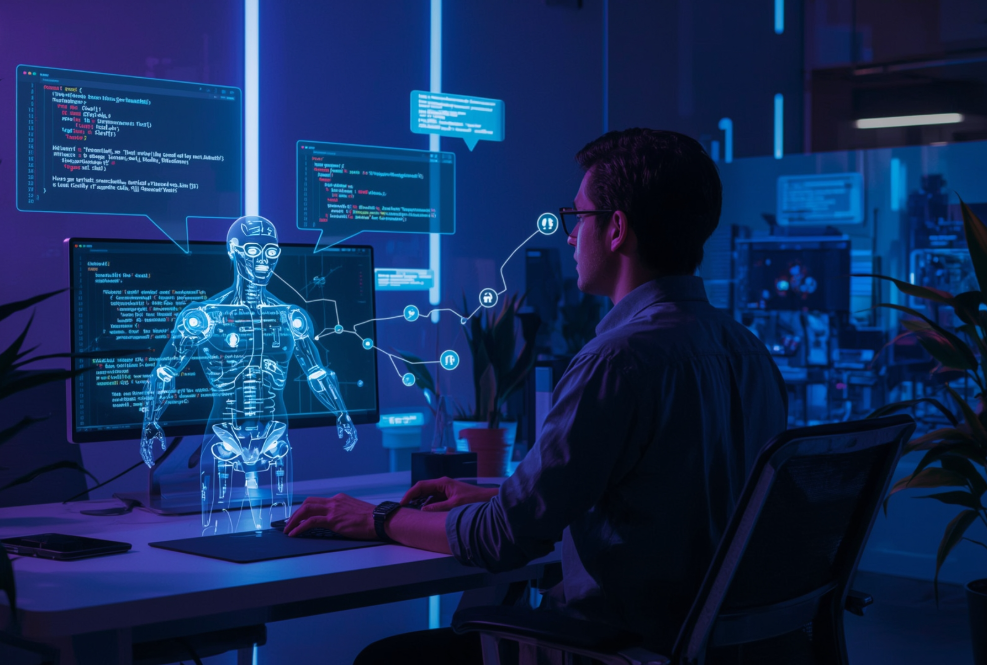
Vibe coding is an emerging software-development workflow that shifts the programmer’s role from writing every line of code to prompting and refining an AI assistant that generates code from natural-language descriptions. Coined by Andrej Karpathy in early 2025, the term refers to building, modifying, and debugging software code by conversing with an AI chatbot. In practice, developers describe high-level goals or functions in plain English, and a large language model (e.g. ChatGPT, GitHub Copilot, Amazon CodeWhisperer, etc.) produces code snippets or even full modules. For example, this Microsoft article notes that vibe coding is “opening the door to newcomers and freeing developers to move faster and experiment.” This is because the AI can handle tedious boilerplate tasks, allowing the human user to guide and review the output. In short, vibe coding treats AI as a “pair programmer”: the user remains responsible for testing and verifying the code, while the AI rapidly generates and refines it in a conversational loop. Benefits of Vibe Coding Drawbacks and Risks Despite the advantages, AI-assisted coding has important limitations and risks: When to Consider Vibe Coding Organizations should consider AI-assisted coding (“vibe coding”) in scenarios where the benefits outweigh the risks: When Not to Use Vibe Coding Despite its promise, vibe coding is not suitable for all contexts. Teams should not rely on AI generation for scenarios where correctness, security, or control are paramount: Our Assessment of AI-Driven Development Vibe coding is emerging as a powerful new paradigm in software development. It leverages generative AI to accelerate prototyping, reduce repetitive work, and make coding more interactive and intuitive. Industry studies show clear advantages, such as quicker review times and more code being produced, and more developers are using AI tools to try out new ideas quickly. At the same time, recent research highlights the limitations of this approach. AI-generated code can introduce bugs, security gaps, or architectural issues, and it may create long-term dependency, legal, or maintainability concerns. Vibe coding is most effective when rapid iteration and ideation are essential, but it still requires disciplined oversight, thorough testing, and the guidance of experienced engineers, particularly for systems where reliability is critical. At its current state, vibe coding does not replace human expertise. At EACOMM, with nearly 25 years of experience in custom software development, we view AI as a powerful assistant rather than a substitute for skilled engineers. It accelerates development, streamlines debugging, and enhances our workflow, but it delivers these benefits precisely because our developers have the knowledge and experience to guide, verify, and refine its output. Vibe coding amplifies expert capability; it does not remove the need for it.
Free Dummy Data Generator for the Philippines – CSV and JSON Export

In the world of software development and data analytics, realistic test data is essential. Without it, applications may work in theory but fail in practice. Generic placeholder text like “Lorem Ipsum” or random numbers don’t reflect real-world scenarios, especially when building solutions tailored to the Philippine market. That’s where the Philippine Dummy Data Generator by EACOMM Corporation comes in. This free online test data generator provides lifelike Philippine data—including names, addresses, phone numbers, and more—ready to download in CSV or JSON formats. What is the Philippine Dummy Data Generator? The Philippine Dummy Data Generator is a lightweight yet powerful software testing tool for developers, QA engineers, and database designers. Unlike generic dummy data tools, it generates locally relevant data that reflects Philippine naming conventions, address structures, and formats. Available Fields You Can Generate You can choose which fields to include, set the number of records you need, and download them instantly. Why Use a Test Data Generator for the Philippines? 1. Realistic Philippine Test Data Developers working on apps, CRMs, e-commerce, or government systems can validate workflows using authentic Philippine-style data, making tests more accurate. 2. Save Time and Effort No need to manually create spreadsheets of fake data. Generate hundreds of rows in seconds. 3. JSON and CSV Export Choose CSV for spreadsheets or JSON for system integrations and APIs—perfect for modern workflows. 4. Versatile Use Cases How to Use the Philippine Dummy Data Generator Using the tool is simple and requires no signup: Who Should Use This Free Tool? The Philippine Dummy Data Generator is ideal for: Build Smarter with Realistic Philippine Test Data The Philippine Dummy Data Generator is more than just a convenience—it’s a powerful free tool for developers, testers, and analysts. By using lifelike Philippine datasets, you ensure that your applications are tested against real-world scenarios, making them more reliable and user-friendly. Try it now: Philippine Dummy Data Generator
Bletchley Park: The Secret Birthplace of the Digital World

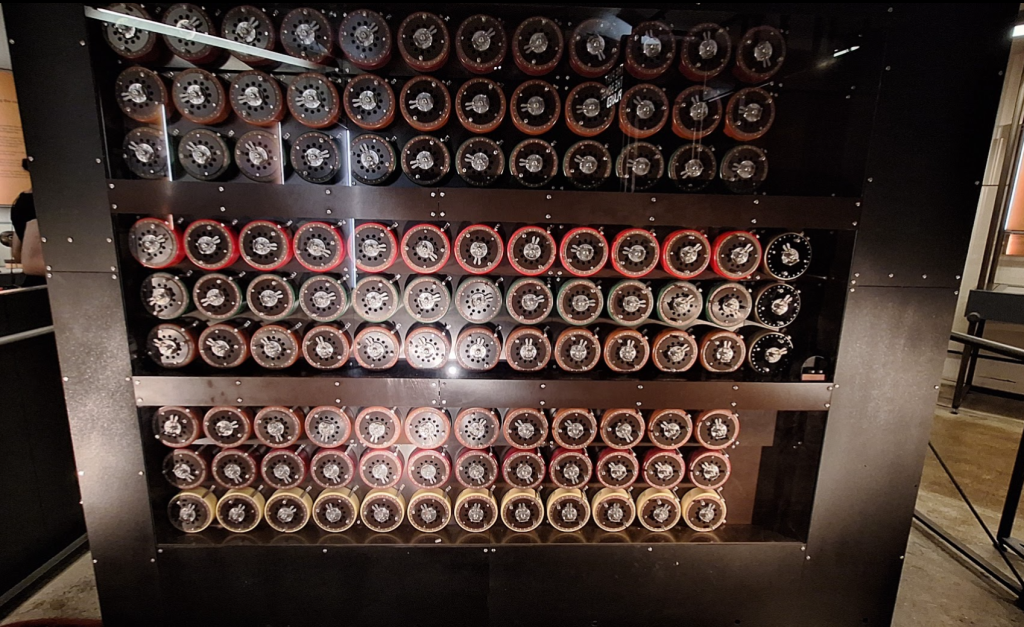
A Storied Beginning Perched near present-day Milton Keynes in Buckinghamshire, Bletchley Park began its life as a quintessential English country estate. The site boasts a long history—first mentioned in the Domesday Book of 1086—and saw a significant architectural reincarnation in the late 19th century. In 1883, financier Sir Herbert Samuel Leon acquired the property and transformed a modest farmhouse and prior structure into an eclectic mansion, blending Victorian Gothic, Tudor Revival, and Dutch Baroque styles. The resulting house featured asymmetrical layouts, ornate gables, sumptuous interiors, reproduction Jacobean ceilings, marble arches, and a ballroom—making it as peculiar as it was grand. Following Sir Herbert’s death in 1926, his widow, Fanny Leon, maintained the estate until 1937. A year later, in 1938, Hugh Sinclair, head of MI6, purchased the mansion and its 581-acre grounds—largely using his own funds—for £6,000. The location’s excellent transportation links—particularly its proximity to Bletchley railway station and the intersecting Varsity Line (linking Oxford and Cambridge)—made it an ideal site for what would become Britain’s wartime intelligence hub. From Country House to Intelligence Powerhouse As Europe braced for war, Bletchley Park rapidly evolved from a tranquil estate into “Station X,” the nerve center of British cryptanalysis. The Government Code and Cypher School (GC&CS) relocated to the mansion in August 1939. What began as a modest group of cryptanalysts—no more than ten in the early days—soon swelled into a sprawling network of huts, blocks, and support facilities across the grounds, running around the clock. By January 1945, during peak operations, nearly 9,000 personnel were working at Bletchley Park and its satellite outposts—about three-quarters of whom were women, primarily WRNS (Women’s Royal Naval Service) members who staffed the vital machinery and supporting functions. The sheer scale and secrecy of the site earned it the nickname the “intelligence factory,” where cryptographers, linguists, mathematicians, and countless support staff—toiled behind the scenes to reshape the outcome of the war. Innovating Victory: Bombe, Heath Robinson & Colossus Bletchley Park’s triumph was not only the result of brilliant minds but also of groundbreaking machines that pushed the boundaries of technology in their time. These innovations combined mechanical engineering, electrical ingenuity, and early computing theory to solve problems once thought impossible. The Bombe Designed by mathematician Alan Turing and refined by Gordon Welchman, the Bombe was an electromechanical device built to unravel the daily settings of the German Enigma machine. The Enigma’s complex system of rotating cipher rotors created billions of possible encryption combinations, making manual decoding impossible within operational timeframes. The Bombe automated the trial-and-error process, rapidly eliminating incorrect settings until the correct rotor positions were found. With multiple Bombes running simultaneously, Bletchley Park could break intercepted messages in hours rather than weeks—turning intelligence into actionable insight before enemy plans unfolded. The Heath Robinson While the Bombe was focused on Enigma, the Germans also used an even more complex cipher—Lorenz SZ 40/42, nicknamed “Tunny” by British cryptanalysts—for high-level communications between Hitler and his generals. To tackle this, engineer Frank Morrell and the Post Office Research Station built the Heath Robinson, a semi-automated machine that used synchronized paper tapes to compare intercepted cipher text with simulated key streams. Although ingenious, Heath Robinson was slow, mechanically unreliable, and prone to synchronization errors. Nevertheless, it laid the critical groundwork for what would become the world’s first electronic computer. The Colossus Recognizing Heath Robinson’s limitations, engineer Tommy Flowers of the General Post Office designed Colossus, a machine that replaced most mechanical parts with vacuum tubes for faster, more reliable processing. Completed in 1944, Colossus could process 5,000 characters per second and run complex statistical tests on encrypted messages. Its programmable nature—using switches and plugboards—made it the first digital electronic computer in history. Colossus reduced Lorenz message decryption from weeks to mere hours, providing Allied commanders with vital intelligence that influenced operations such as the D-Day landings. These three machines—Bombe, Heath Robinson, and Colossus—were more than wartime tools; they were the ancestors of modern computing. Each represented a leap forward in automation, cryptanalysis, and electronic engineering, establishing principles that underpin computer science, cybersecurity, and artificial intelligence today. The People Behind the Machines Bletchley Park’s success was not solely a triumph of technology—it was a testament to the determination, ingenuity, and collaborative spirit of its people. Roughly 75% of its workforce were women, many of them serving in the Women’s Royal Naval Service (WRENS) as operators of the Bombe and Colossus machines, as translators, clerks, and radio interceptors. These women formed the backbone of operations, ensuring that the painstaking work of deciphering enemy codes continued day and night. Alongside them were some of the greatest minds of the era—Alan Turing, Gordon Welchman, Max Newman, Bill Tutte, Joan Clarke, and others—whose organizational and cryptanalytic breakthroughs changed the course of history. Turning the Tide of War The decoding of Enigma and Lorenz messages didn’t just win battles—it saved lives. By gaining unprecedented visibility into German U-boat movements, weather operations, and strategic military plans, the Allies were able to anticipate enemy actions and mount effective countermeasures. Historians estimate that the work at Bletchley Park shortened the war by up to two years, preventing millions of potential casualties and reshaping the post-war geopolitical landscape. This was an extraordinary example of how innovation, when paired with dedicated teamwork, can alter the trajectory of history itself. Legacy & Relevance Today When Bletchley Park was finally decommissioned and its wartime secrets revealed in the mid-1970s, the world learned of a silent victory that had not only shortened the war but had also given birth to the foundations of modern computing, cryptography, and intelligence gathering. The work done here went far beyond breaking enemy codes—it pioneered the very concepts of algorithm design, machine logic, and human-computer interaction that underpin today’s software industry. Since becoming a museum and heritage center in 1994, Bletchley Park has hosted exhibitions such as the on-going “The Age of A.I.”, drawing direct parallels between wartime breakthroughs and today’s technological frontiers. Visionaries like Alan Turing, Jack Good, and Donald Michie moved from the heat of wartime
EACOMM presents new AI technology at the 2023 Procurement Summit

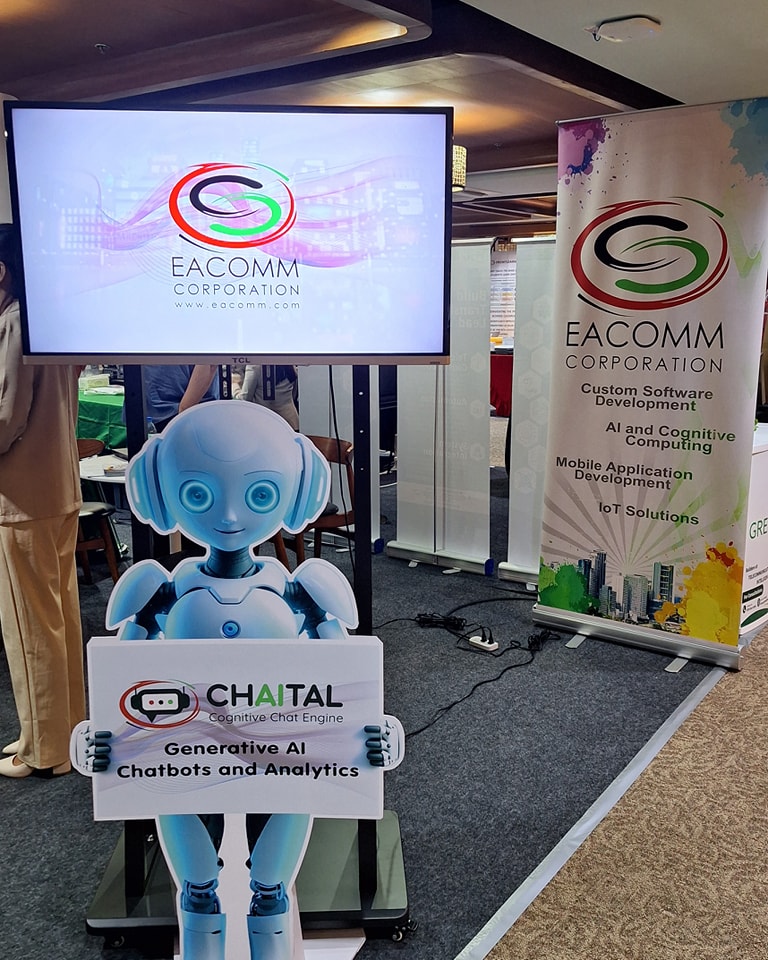
EACOMM Corporation, a leading Filipino-owned custom software developer specializing in AI technology, IoT, web, and mobile applications, was honored to be invited to participate at the recently concluded 2023 Philippine Procurement Summit, held on October 23–24, 2023, at the Philippine International Convention Center and organized by the Government Procurement Policy Board Technical Support Office (GPPB-TSO). The event revolved around the theme “Building a Cadre of Procurement Professionals as Catalysts for Innovation and Competitiveness.” The Philippine Procurement Summit is an annual event that serves as a platform for government procurement practitioners and suppliers to converge, exchange knowledge, and explore innovative strategies to transform the procurement landscape. The summit’s focus on building a cadre of procurement professionals reflects the desire to equip participants with the skills and insights needed to drive innovation and enhance competitiveness within their organizations. EACOMM Corporation seized this opportunity to demonstrate its expertise in the field of AI technology and its transformative potential for government services. Senior System Architect Karlo Martin Robosa delivered a presentation on various AI-related projects undertaken by EACOMM over the past decade, with an emphasis on generative AI use cases in the Philippines, particularly in government. During his presentation, Mr. Robosa shed light on EACOMM’s ongoing and past AI projects, including chatbots, analytics, machine learning, and IBM Watson integrations. The 2023 Procurement Summit was an enriching and inspiring event, and EACOMM Corporation is proud to have been part of this gathering of professionals who are committed to advancing the field of procurement. The summit demonstrated the transformative power of procurement in driving innovation and competitiveness, ultimately shaping the future of government operations and supplier relationships. Inquire now about how AI technology can be used for your business. EACOMM offers free consultations, demonstrations, and presentations to key stakeholders to better understand AI technology and how it can be used in both public and private organizations.
EACOMM is one of the Outstanding Software Development Firms

EACOMM is part the Global list of The Top Software Development & Software Testing Companies In March, According To DesignRush
Your New Customized HRIS and Payroll Software – A Competitive Advantage

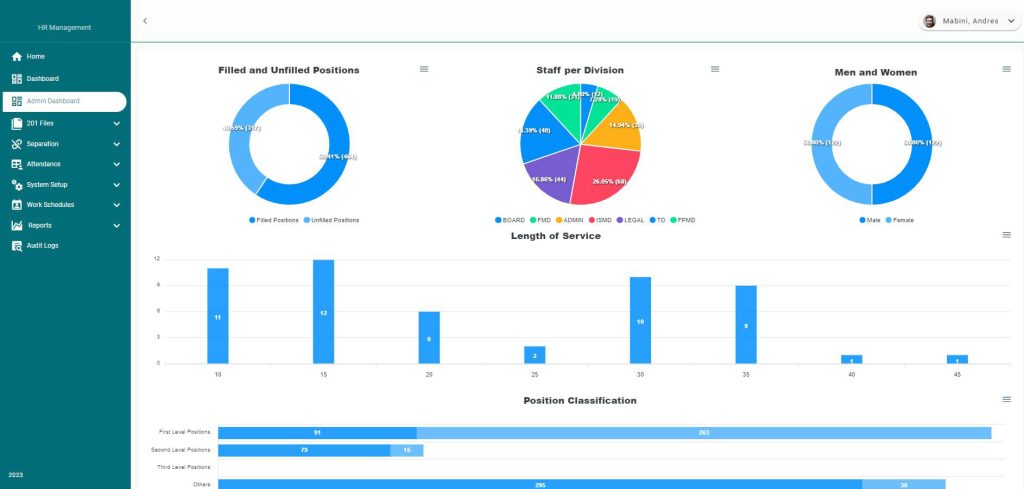
EACOMM has deployed custom HRIS and payroll systems for both corporate and government clients with thousands of users currently using our systems.
Is Custom Software Development Best for your New Project?

What are the factors to consider when opting for a custom-built software system versus purchasing off-the-shelf software?