How to Unlock your Data with Power BI Integration

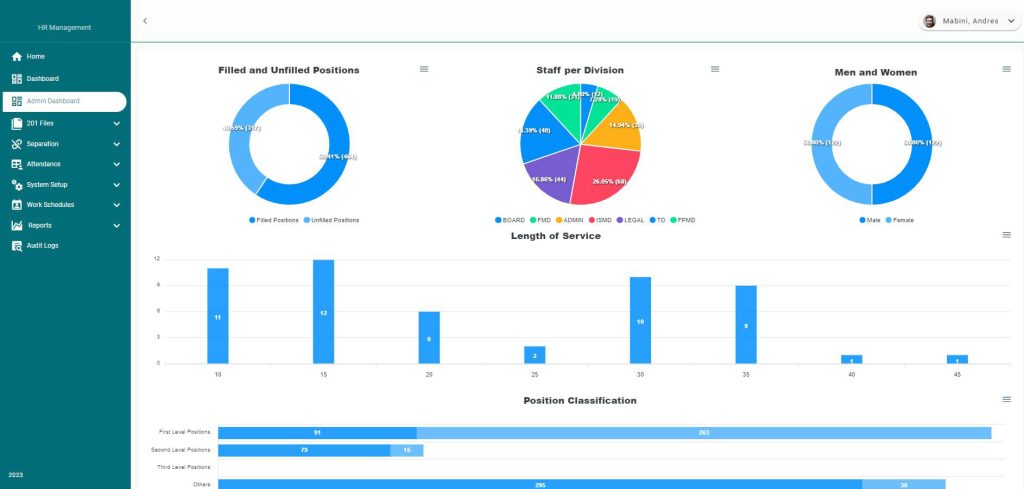
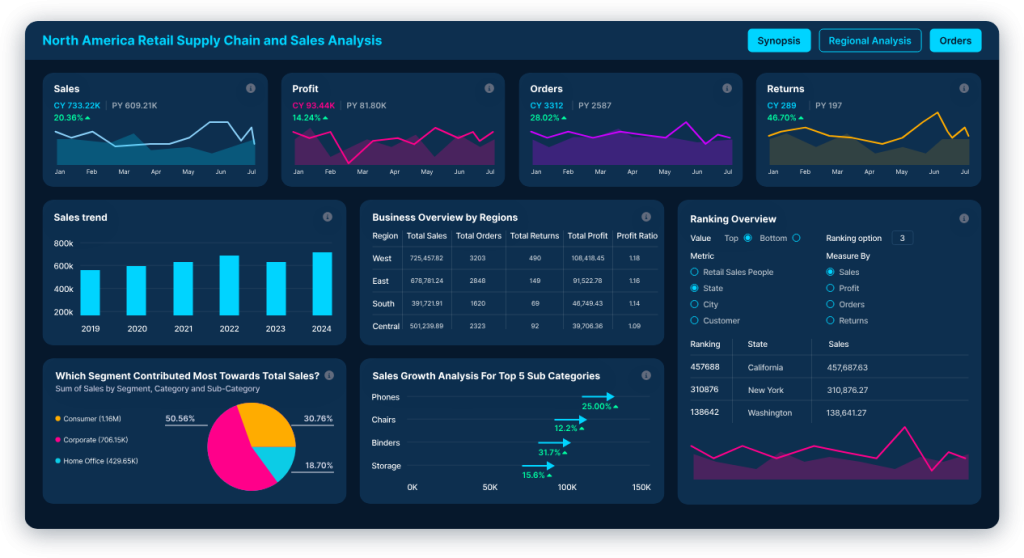
Organizations are generating more information than ever before. Data flows from ERP systems and CRMs to accounting platforms, e-commerce portals, and custom enterprise applications. The modern challenge is no longer collecting this data but transforming it into actionable insight. One of the most effective platforms for this purpose is Microsoft Power BI, a business intelligence solution that enables organizations to analyze data, generate dynamic dashboards, and make informed decisions in real time. For Philippine enterprises seeking to modernize reporting and analytics, deploying Power BI strategically can unlock significant operational advantages. What is Power BI? Microsoft Power BI is a suite of business analytics tools that allows organizations to connect to multiple data sources, transform and model data, and create interactive visualizations. It enables the publication and sharing of dashboards securely while fostering self-service analytics across departments. Power BI is designed for both technical and non-technical users. This allows executives, managers, and operational teams to view real-time metrics without relying heavily on manual reports or spreadsheets. Key Features of Power BI 1. Seamless Data Integration Power BI supports connections to hundreds of data sources. These include Microsoft SQL Server, MySQL, PostgreSQL, Excel spreadsheets, and cloud platforms like Azure and AWS. It also connects via REST APIs to custom-built systems. For organizations with legacy or custom-developed platforms—such as HRIS, logistics, or document management systems—Power BI can be configured to extract and visualize data without disrupting existing operations. 2. Real-Time and Near Real-Time Dashboards Power BI enables immediate reporting through DirectQuery connections, scheduled data refreshes, and streaming datasets. This allows management in the Philippines to monitor sales performance, operational KPIs, inventory levels, and financial indicators as they happen. Instead of waiting for weekly or monthly reports, decision-makers gain immediate visibility into performance trends. 3. Advanced Data Modeling and Analytics The platform includes Data Analysis Expressions (DAX) for complex calculations and Power Query for data transformation. Organizations can go beyond simple charts and develop analytical models that identify trends, forecast outcomes, and highlight performance gaps. 4. Enterprise-Grade Security Security is critical in enterprise environments. Power BI supports role-based access control (RBAC), row-level security (RLS), and integration with Active Directory. This ensures sensitive financial and personnel data is accessible only to authorized users. 5. Mobility and Collaboration Dashboards are accessible via web browsers, mobile applications on iOS and Android, and embedded portals. Reports can also be integrated directly into internal systems such as intranets or CRMs. This allows analytics to become part of daily workflows rather than a separate reporting exercise. A Logical Extension of Microsoft 365 Investments For many organizations in the Philippines, the adoption of Microsoft 365 is already well established. Businesses rely daily on tools such as Excel, SharePoint, Teams, and Outlook. In this context, Power BI becomes a natural and strategic extension of an existing ecosystem investment. Because user identities and security policies are already managed through Azure Active Directory, Power BI deployment becomes more streamlined. Users who are already familiar with Excel find the transition to Power BI intuitive. Data models and calculations built in Excel can be migrated or enhanced within Power BI, which reduces training overhead and accelerates adoption. Why EACOMM is the Ideal Partner in Deploying Power BI in the Philippines While Power BI is accessible, effective deployment requires data architecture planning, proper ETL (Extract, Transform, Load) configuration, and governance framework design. Without proper planning, BI projects risk becoming fragmented reporting tools rather than enterprise-wide decision platforms. With a quarter of a century of experience in enterprise systems development and digital transformation, EACOMM provides end-to-end Power BI consultancy and development services tailored to the Philippine market and beyond. 1. Strategic BI Architecture Design EACOMM begins with a comprehensive review of existing systems and data sources. Instead of creating isolated dashboards, we design a scalable analytics framework aligned with specific business objectives. 2. Custom Integration Expertise Many Philippine organizations operate a mix of legacy systems and cloud-based applications. EACOMM’s experience in custom software development allows seamless integration of Power BI into complex environments, ensuring data consistency and reliability. If need be, EACOMM can easily build APIs and middleware to ensure smooth and full integration of your system databases with Power BI. 3. Secure and Scalable Deployment Whether on-premise, cloud-based, or hybrid, EACOMM configures Power BI environments with proper governance structures, role-based access policies, and optimized performance. 4. Executive-Level Dashboard Design Data is only valuable when clearly presented. EACOMM designs dashboards that are intuitive, role-specific, and KPI-focused. This ensures that leadership teams can make decisions quickly and confidently. 5. Comprehensive End-User Training Successful adoption depends on user capability. EACOMM provides structured training programs covering Power BI basics for business users, advanced data modeling for analysts, and administration for IT teams. These sessions are tailored to the organization’s specific data context. 6. Microsoft Certified Power BI Consultants Our Power BI specialists hold official Microsoft certifications, ensuring that your deployment follows global best practices and utilizes the latest features within the Microsoft Power Platform. Deploy Power BI Today with EACOMM Corporation Business intelligence initiatives deliver real results when they are built on solid technical architecture and guided by experienced systems integrators. With over 25 years of software development and enterprise systems integration experience, EACOMM brings the depth, discipline, and practical insight necessary to ensure successful Power BI deployments across Philippine organizations. Our longstanding expertise in designing and integrating complex platforms—including custom enterprise applications, database-driven systems, and large-scale digital infrastructures—enables us to connect Microsoft Power BI seamlessly to your existing databases and operational systems. Whether your environment is on-premise, cloud-based, or hybrid, we architect solutions that maximize your current technology investments without requiring disruptive overhauls. Beyond technical implementation, EACOMM provides structured configuration, governance planning, and end-user training to ensure that dashboards are not only deployed—but actively used to support informed decision-making across all levels of the organization. If your organization is ready to transform raw data into real-time, actionable insight, partner with EACOMM today. Contact us to discuss how we can design, deploy, and institutionalize a Power BI solution tailored to

Behind Santa’s Christmas Magic: Happy Holidays from EACOMM!

What the North Pole Can Teach Us About Custom Software Every December, Santa runs the most demanding logistics and workflow operation imaginable, while the world marvels at the magic of Christmas. Billions of wish lists. Millions of toys. One global overnight delivery window. And zero room for delays. Sure, flying reindeer, teleporting chimneys, and tireless Christmas Elves give Santa an advantage most business leaders could only dream of, but even with all that magic, the Santa operation is essentially a massive enterprise workflow ready to collapse under its own peppermint-scented pressure. And big operations need big systems. At EACOMM, our mission has always been simple: deliver innovative, fully customized solutions for unique business process challenges. And really, what could be more unique than Santa’s annual logistics nightmare? Our latest holiday video short may playfully imagine Santa using dashboards, automated workflows, and real-time “naughty vs. nice” analytics, but the challenges faced by Santa and his Elves are not all that different from what many organizations confront daily: And year after year, we see companies shelve transformational projects, not because they are not valuable, but because the thought of deep analysis, proper scoping, and finding the right development partner feels overwhelming. This is where EACOMM steps in. Our team of award-winning project managers, business analysts, and software architects does more than just write code.We diagnose, design, and solve. With decades, not just years, of experience, we have built custom solutions across industries, technologies, and project scales. We have seen what works, what fails, and most importantly, why. When you work with EACOMM, you are not just hiring developers. You are partnering with systems thinkers, problem solvers, and technology strategists who understand that no two businesses (or North Pole workshops) are ever exactly alike. Santa may rely on magic, but businesses rely on expertise.Custom software systems designed with precision, built with care, and aligned with real-world processes are often the key to achieving breakthrough performance. And as we look toward a new year filled with fresh challenges and even bigger opportunities, we are reminded that every organization, much like Santa’s bustling workshop, thrives when the right tools and the right team come together. Whether you are solving holiday-scale logistics or simply aiming to make your operations smoother and smarter, the right custom solution can make all the difference. Wishing You Warmth, Magic, and Momentum As we wrap up another year of innovation, creativity, and collaboration, we extend our heartfelt gratitude to all our clients, partners, and friends. From all of us at EACOMM:Happy Holidays and our Best Wishes for a Prosperous, Joyful, and Inspiring 2026!

The Truth About Vibe Coding (AI-Assisted Programming)

Developer doing Vibe Coding

Vibe coding is an emerging software-development workflow that shifts the programmer’s role from writing every line of code to prompting and refining an AI assistant that generates code from natural-language descriptions. Coined by Andrej Karpathy in early 2025, the term refers to building, modifying, and debugging software code by conversing with an AI chatbot. In practice, developers describe high-level goals or functions in plain English, and a large language model (e.g. ChatGPT, GitHub Copilot, Amazon CodeWhisperer, etc.) produces code snippets or even full modules. For example, this Microsoft article notes that vibe coding is “opening the door to newcomers and freeing developers to move faster and experiment.” This is because the AI can handle tedious boilerplate tasks, allowing the human user to guide and review the output. In short, vibe coding treats AI as a “pair programmer”: the user remains responsible for testing and verifying the code, while the AI rapidly generates and refines it in a conversational loop. Benefits of Vibe Coding Drawbacks and Risks Despite the advantages, AI-assisted coding has important limitations and risks: When to Consider Vibe Coding Organizations should consider AI-assisted coding (“vibe coding”) in scenarios where the benefits outweigh the risks: When Not to Use Vibe Coding Despite its promise, vibe coding is not suitable for all contexts. Teams should not rely on AI generation for scenarios where correctness, security, or control are paramount: Our Assessment of AI-Driven Development Vibe coding is emerging as a powerful new paradigm in software development. It leverages generative AI to accelerate prototyping, reduce repetitive work, and make coding more interactive and intuitive. Industry studies show clear advantages, such as quicker review times and more code being produced, and more developers are using AI tools to try out new ideas quickly. At the same time, recent research highlights the limitations of this approach. AI-generated code can introduce bugs, security gaps, or architectural issues, and it may create long-term dependency, legal, or maintainability concerns. Vibe coding is most effective when rapid iteration and ideation are essential, but it still requires disciplined oversight, thorough testing, and the guidance of experienced engineers, particularly for systems where reliability is critical. At its current state, vibe coding does not replace human expertise. At EACOMM, with nearly 25 years of experience in custom software development, we view AI as a powerful assistant rather than a substitute for skilled engineers. It accelerates development, streamlines debugging, and enhances our workflow, but it delivers these benefits precisely because our developers have the knowledge and experience to guide, verify, and refine its output. Vibe coding amplifies expert capability; it does not remove the need for it.

The First Philippine Physical Internet National Symposium

Physical Internet Philippines

In a groundbreaking initiative, a consortium of dedicated professionals and scholars successfully organized the 1st Conference on the Physical Internet, held on November 22, 2023, at the University of Asia and the Pacific in Pasig City. The conference, operating under the theme “Meeting the Global Logistics Challenge in the Philippines through the Physical Internet,” sought to address the pressing issues faced by the logistics industry in the country. The term “Physical Internet” (PI) refers to an “open global logistics system founded on physical, digital, and operational interconnectivity through encapsulation, interfaces, and protocols” (Montreuil et al, 2013). Drawing inspiration from the concepts of the ‘Digital Internet’ (DI), the PI model aims to revolutionize the movement and storage of physical products. This groundbreaking event was made possible through the collaborative efforts of a Special Interest Group (SIG) dedicated to researching the Physical Internet. Comprising scholars and industry practitioners, this SIG has been actively working towards implementing the vision of the Physical Internet for the logistics sector in the Philippines. The conference provided a platform for experts, academics, and professionals to exchange insights, share research findings, and explore innovative solutions. Attendees engaged in discussions on the challenges and opportunities posed by the integration of the Physical Internet into the logistics landscape of the Philippines. EACOMM’s Managing Director, Mike Torres, participated in the conference by sharing how it would be possible to build the System of Logistics Networks. The presentation highlighted the various technologies needed to realize the Physical Internet. EACOMM’s experience in AI, IoT, and custom software development are cited as examples of how Filipino companies, engineers, and developers are ready to help develop this groundbreaking revolution. For those seeking further information, the conference organizers invite interested parties to visit the official website for comprehensive details. The website serves as a valuable resource, offering insights into the conference proceedings, research materials, and ongoing initiatives related to the Physical Internet in the Philippines: https://sites.google.com/uap.asia/physicalinternetph/conference Download EACOMM’s Presentation here: The Physical Internet – Building a System of Logistics Networks

EACOMM presents new AI technology at the 2023 Procurement Summit

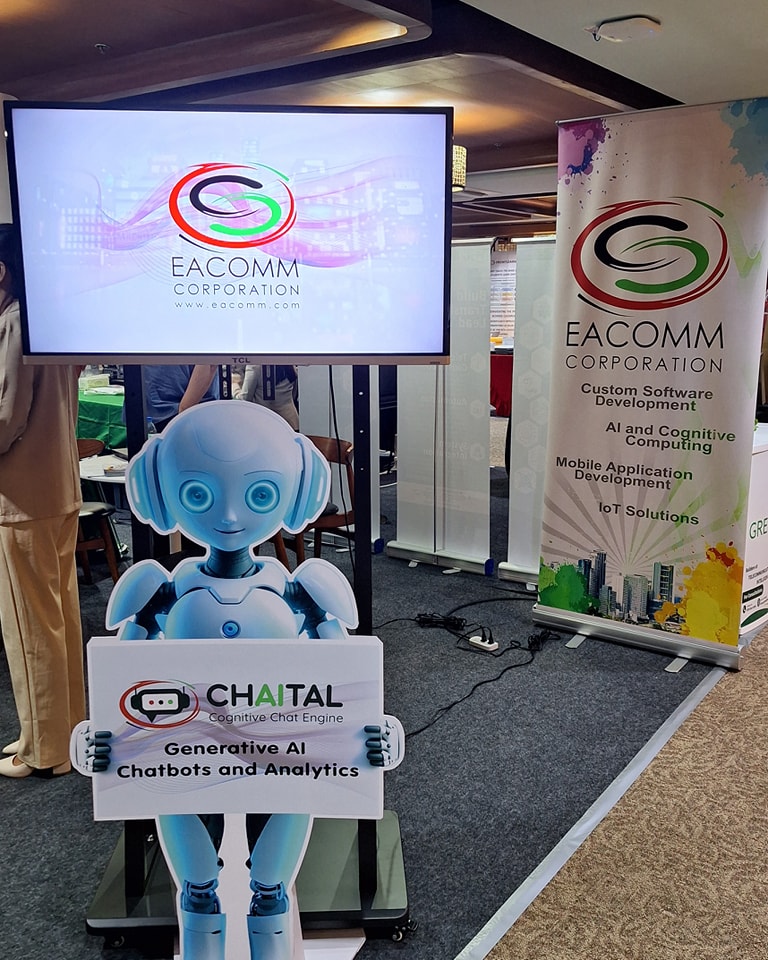
EACOMM Corporation, a leading Filipino-owned custom software developer specializing in AI technology, IoT, web, and mobile applications, was honored to be invited to participate at the recently concluded 2023 Philippine Procurement Summit, held on October 23–24, 2023, at the Philippine International Convention Center and organized by the Government Procurement Policy Board Technical Support Office (GPPB-TSO). The event revolved around the theme “Building a Cadre of Procurement Professionals as Catalysts for Innovation and Competitiveness.” The Philippine Procurement Summit is an annual event that serves as a platform for government procurement practitioners and suppliers to converge, exchange knowledge, and explore innovative strategies to transform the procurement landscape. The summit’s focus on building a cadre of procurement professionals reflects the desire to equip participants with the skills and insights needed to drive innovation and enhance competitiveness within their organizations. EACOMM Corporation seized this opportunity to demonstrate its expertise in the field of AI technology and its transformative potential for government services. Senior System Architect Karlo Martin Robosa delivered a presentation on various AI-related projects undertaken by EACOMM over the past decade, with an emphasis on generative AI use cases in the Philippines, particularly in government. During his presentation, Mr. Robosa shed light on EACOMM’s ongoing and past AI projects, including chatbots, analytics, machine learning, and IBM Watson integrations. The 2023 Procurement Summit was an enriching and inspiring event, and EACOMM Corporation is proud to have been part of this gathering of professionals who are committed to advancing the field of procurement. The summit demonstrated the transformative power of procurement in driving innovation and competitiveness, ultimately shaping the future of government operations and supplier relationships. Inquire now about how AI technology can be used for your business. EACOMM offers free consultations, demonstrations, and presentations to key stakeholders to better understand AI technology and how it can be used in both public and private organizations.

Selecting the Best Solution Stack for your Breakthrough Startup

Creating a new technology startup is a daunting process. Not only do you need to think of a new and innovative idea, but you also have to create a team, market your idea, and create your application or website. EACOMM, as a custom software developer, is often approached by would-be startups to help them realize their dream. Over the years we have helped create successful startups in the fields of telecommunications, logistics, e-commerce, and marketing. Selecting a Solution Stack is one of the more important decisions we need to make when starting a new software project. What is a Solution Stack? A solution stack or software stack is the set of software applications needed to create a platform where a website or application will reside. Over the two decades that EACOMM has been developing software, we have used several solution stacks such as: LAMP (Linux, Apache, MySQL, PHP): Arguably the most popular solution stack for web application development, LAMP has been around since the turn of the century. Linux is the gold standard operating system for web servers. It is secure, robust, and very stable. Apache is one of the first web servers and despite nearing three decades in existence, is still one of the top web servers being used in the world. MySQL (or sometimes MariaDB) is an open-source relational database that is also nearing three decades of existence. MySQL is proven to be highly stable and reliable as well as fairly easy to learn how to use. Finally, PHP: Hypertext Preprocessor is a server-side scripting language. Through PHP, a webpage can access databases, run server applications, and access server resources. The key advantage of using LAMP is that it is 100% open source and as such completely free to use. It is also quite easy to find developers who know this stack, given its popularity. However, its popularity is also its main weakness, in that it is a common target for hackers and PHP is known to have several security flaws. LAMP deployments can also be difficult to scale once your startup has gained popularity. WAMP (Windows, Apache, MySQL, PHP): A variant of the previous stack that replaces the Linux Operating System with Windows. This is often used as an initial development environment for projects that will eventually migrate to the LAMP stack once it goes live. The reason for this is most desktops are running Windows. With the familiarity and popularity of the Windows User Interface, it is easy to see that a lot of people find it simpler to deploy and maintain a WAMP than a LAMP stack. However, deploying WAMP in a live environment further opens up your system to security issues as most viruses target Windows-based machines. WINS (Windows Server, IIS, .NET, SQL Server): For large corporations and government agencies, there can be resistance to using open-source applications. WINS is a Microsoft-developed solution stack that, while much more expensive to deploy than Linux-based stacks, comes with support and warranties from its developer. For risk-averse organizations, WINS is a viable platform to utilize, especially if money is not an issue. MEAN/MERN/MEVN (MongoDB, ExpressJS, Angular/ReactJS/VueJS, NodeJS): These three solutions stacks are all built around: MongoDB, a NoSQL database that uses JSON-like document schema; ExpressJS, a backend web application framework; NodeJS, a cross-platform opensource web server; and a choice of either Angular, ReactJS, or VueJS which are all front-end JavaScript development frameworks. These solution stacks have strong advantages in terms of scalability and security. They also allow developers to focus their skills on a single programming language: JavaScript. As a modern solution stack, they can easily take advantage of the scalability that cloud infrastructure offers through virtualization and containerization. Choosing a Solution Stack Choosing the correct solution stack can spell the difference between the long-term success or failure of a technology startup. Hence, one should consider several factors to ensure the solution stack to be deployed is apt for the project: Last Words… Remember that the solution stack to be used in developing the technology infrastructure of your startup is a critical decision that can affect the long-term viability of your new business. While deploying using cheaper or more popular options would help you get to market quicker, it might affect the scalability and performance of your system once your startup gains popularity. Hence, when planning out your initial 1-3 years as a business, take into account how your target growth might affect the solution stack you are looking to use. If you see rapid growth, better to invest in scalable, secure, high-performance stacks from the start. If growth is slower or if the system is not too performance-dependent, then starting on simpler solution stacks would not only save you money but also get you to market much quicker. Start your conversation today with one of EACOMM Corporation’s system architects to find out how best to approach the custom software development of your highly innovative and breakthrough startup!

Microservice Architecture for Powerful and Scalable Applications

What is Microservice Architecture? Microservices, also known as microservice architecture, is a software design approach in which a large application is divided into small, independent, and modular services. Each microservice focuses on a specific business function or capability and can be developed, tested, and deployed independently of the other services. The main advantage of microservices is that they enable organizations to deliver new features and capabilities quickly and efficiently, as they can be developed and tested independently of the other services. Additionally, microservices can be deployed on different platforms and technologies, allowing organizations to choose the best tools and technologies for each service. Microservices are often built using APIs, which enable the services to communicate with each other and provide a seamless user experience. This approach allows organizations to build complex and scalable applications that are easy to maintain and modify. Microservices are typically deployed in a distributed architecture, with each service running on its own server or cluster of servers. This approach allows for scalability and improved fault tolerance, as the services can be scaled independently of each other and can continue to function even if one service fails. Another advantage of microservices is that they are easier to manage and maintain than traditional monolithic applications. Because each service is independent, any changes or updates to a service can be made without affecting the other services. Additionally, microservices can be developed and tested by small teams, allowing for faster development and deployment. However, microservices also have some challenges, such as increased complexity and the need for a robust governance structure to manage the various services. Additionally, the use of APIs and distributed architecture can result in increased network traffic and latency, which can impact the performance of the application. Overall, microservices provide organizations with a flexible and scalable approach to software development, allowing them to deliver new features and capabilities quickly and efficiently. By dividing an application into small, independent services, organizations can improve their ability to manage and maintain complex applications. Examples of Organizations using Microservices One of the most well-known examples of an organization using microservices is Netflix. The company uses microservices to power its streaming service, with each service focusing on a specific capability, such as user authentication, video playback, and recommendation algorithms. Using microservices allows Netflix to develop and deploy new features quickly and efficiently, as each service can be developed and tested independently. Additionally, the use of microservices allows Netflix to scale each service independently, enabling the company to handle the massive amounts of data and traffic generated by its millions of users. eBay uses microservices to power its online marketplace, with each service focusing on a specific business function, such as listing items, managing bids, and handling payments. Another example of an organization using microservices is Twitter. The company uses microservices to power its social media platform, with each service focusing on a specific capability, such as user authentication, posting and displaying tweets, and managing user interactions. These examples demonstrate how organizations can use microservices to power complex and scalable applications, allowing them to develop and deploy new features quickly and efficiently. By dividing an application into small, independent services, organizations can improve their ability to manage and maintain complex applications. Deploying Microservices Deploying microservices is complicated and requires careful preparation and execution. This custom software development method breaks a large application into smaller, independent components with their own functionality and capabilities. This simplifies upgrades and lets you build and distribute each component separately. API development helps microservices communicate and integrate. The steps in deploying microservices include: Microservices in the Philippines In the context of custom software development in the Philippines, microservices can be a useful approach for building large and complex applications. Online banking companies may employ microservices to develop their applications, with microservices for account administration, transactions, and payment processing. This simplifies application upgrades and lets each development team focus on its specialty. E-commerce is another example of microservices in Philippine custom software development. Microservices can be used to develop an online retail platform’s application, with independent microservices for product catalog, shopping cart, payment processing, and delivery. This lets development teams work on different portions of the app at once and grow and adapt to changing business needs. Businesses and organizations in the Philippines are using microservices to strengthen their digital capabilities and adapt to the fast-changing digital world. Many financial organizations are embracing microservices to improve their web platforms and offer more tailored and efficient services to customers. EACOMM Corporation has been utilizing Microservice Architecture when developing custom software applications for clients in the Philippines and countries such as the United States, United Kingdom, Australia, and Singapore. Contact us today to find out how EACOMM can develop custom-built software systems for your organization using microservice architecture.