Behind Santa’s Christmas Magic: Happy Holidays from EACOMM!
What the North Pole Can Teach Us About Custom Software Every December, Santa runs the most demanding logistics and workflow operation imaginable, while the world marvels at the magic of Christmas. Billions of wish lists. Millions of toys. One global overnight delivery window. And zero room for delays. Sure, flying reindeer, teleporting chimneys, and tireless Christmas Elves give Santa an advantage most business leaders could only dream of, but even with all that magic, the Santa operation is essentially a massive enterprise workflow ready to collapse under its own peppermint-scented pressure. And big operations need big systems. At EACOMM, our mission has always been simple: deliver innovative, fully customized solutions for unique business process challenges. And really, what could be more unique than Santa’s annual logistics nightmare? Our latest holiday video short may playfully imagine Santa using dashboards, automated workflows, and real-time “naughty vs. nice” analytics, but the challenges faced by Santa and his Elves are not all that different from what many organizations confront daily: And year after year, we see companies shelve transformational projects, not because they are not valuable, but because the thought of deep analysis, proper scoping, and finding the right development partner feels overwhelming. This is where EACOMM steps in. Our team of award-winning project managers, business analysts, and software architects does more than just write code.We diagnose, design, and solve. With decades, not just years, of experience, we have built custom solutions across industries, technologies, and project scales. We have seen what works, what fails, and most importantly, why. When you work with EACOMM, you are not just hiring developers. You are partnering with systems thinkers, problem solvers, and technology strategists who understand that no two businesses (or North Pole workshops) are ever exactly alike. Santa may rely on magic, but businesses rely on expertise.Custom software systems designed with precision, built with care, and aligned with real-world processes are often the key to achieving breakthrough performance. And as we look toward a new year filled with fresh challenges and even bigger opportunities, we are reminded that every organization, much like Santa’s bustling workshop, thrives when the right tools and the right team come together. Whether you are solving holiday-scale logistics or simply aiming to make your operations smoother and smarter, the right custom solution can make all the difference. Wishing You Warmth, Magic, and Momentum As we wrap up another year of innovation, creativity, and collaboration, we extend our heartfelt gratitude to all our clients, partners, and friends. From all of us at EACOMM:Happy Holidays and our Best Wishes for a Prosperous, Joyful, and Inspiring 2026!

Agentic AI: This New Form of AI Doesn’t Need Prompts

As enterprises continue to digitize operations and seek intelligent automation, the concept of Agentic AI has emerged as a defining force in the next evolution of artificial intelligence. The 2025 ISG Buyers Guide: Agentic and Generative AI serves as a vital resource for understanding the rapidly growing ecosystem of software providers addressing this technological transformation. While generative AI (GenAI) has captured attention for its content generation capabilities, it is Agentic AI that promises to revolutionize how systems autonomously execute complex tasks in dynamic environments. What is Agentic AI? ISG Research defines Agentic AI as artificial intelligence capable of taking autonomous actions based on an understanding of its environment and specific goals. Unlike GenAI, which relies on prompts to generate responses, Agentic AI functions like a digital agent—perceiving, reasoning, and acting independently across software systems. This distinction marks a fundamental shift from passive AI interaction to proactive, goal-driven behavior, making Agentic AI indispensable for process automation, workflow management, and intelligent decision support. Agentic AI vs. Generative AI: Complementary, Not Competitive While Generative AI excels at producing content—text, images, code—based on user prompts, its effectiveness is limited by accuracy issues, commonly referred to as hallucinations. Enterprises have attempted to overcome these challenges by fine-tuning large language models (LLMs), incorporating Retrieval-Augmented Generation (RAG), and investing in prompt engineering. However, when operational outcomes depend on autonomous decision-making rather than static content generation, Agentic AI becomes the more appropriate model. Agentic systems go beyond language understanding to execute complex, multi-step actions. These systems often leverage Large Action Models (LAMs) or augmented LLMs trained on sequences of decisions and outcomes. As such, AI Agents represents a more advanced capability: a software agent that can function independently to meet enterprise objectives. Market Trends and the Rise of Agentic AI Platforms Driven by the need for intelligent automation and increased ROI, enterprises are increasingly adopting Agentic AI to enhance operational efficiency. According to ISG, a third of enterprises are already investing in AI-driven business process workflow management—an area where Agentic AI plays a leading role. At the same time, the cost of operating expansive GenAI models has prompted organizations to shift towards smaller, task-specific models. This pivot has also influenced the rise of “model gardens,” where a variety of AI models, including agentic architectures, are deployed and managed for specific use cases. LLMOps—extensions of MLOps tailored for LLMs—are further maturing to accommodate the unique demands of deploying Agentic AI, from lifecycle governance to performance monitoring. Evaluating Agentic AI: Methodology and Key Leaders The ISG Buyers Guide introduces a structured, criteria-driven approach for evaluating software providers based on their Agentic AI capabilities. Enterprises are encouraged to assess platforms across five product experience dimensions—capability, adaptability, usability, manageability, and reliability—as well as customer-focused metrics like TCO/ROI and solution validation. Google Cloud, Oracle, and IBM lead the pack in providing comprehensive support for Agentic AI, scoring highly on both technical and customer experience metrics. Their platforms exhibit strong agentic capabilities, supported by robust model orchestration, developer tooling, and integration with enterprise workflows. Other notable players such as Databricks, Microsoft, and AWS have also made significant strides, offering modular toolsets that support the development and deployment of autonomous agents. ISG’s quadrant classification—Exemplary, Innovative, Merit, and Assurance—further contextualizes the maturity and enterprise fit of each provider. Strategic Implications of Agentic AI for Enterprises Deploying Agentic AI is not merely a technological choice but a strategic imperative. Autonomous agents hold the potential to reduce operational overhead, improve decision accuracy, and enable real-time responsiveness in complex business environments. However, effective adoption requires a systematic approach, including: As with any enterprise investment, the fit between a provider’s offerings and organizational needs is paramount. Overly complex systems may introduce implementation risk, while insufficient agentic functionality may limit return on investment. Unlocking Agentic AI’s Potential in the Philippines The 2025 ISG Buyers Guide highlights Agentic AI as a transformative force in enterprise technology—and its implications for the Philippines are particularly significant. As the country continues to position itself as a digital innovation hub in Southeast Asia, the adoption of Agentic AI presents a strategic opportunity to enhance competitiveness across both the public and private sectors. With a thriving business process outsourcing (BPO) industry, a rapidly growing digital economy, and increasing government investment in smart governance, the Philippines is uniquely positioned to benefit from the autonomous capabilities of AI Agents. From automating repetitive workflows in contact centers to enabling intelligent public service delivery and accelerating digital transformation in SMEs, Agentic AI can drive operational efficiency, reduce human error, and expand access to services across geographically distributed regions. Among the global leaders in this field, IBM’s watsonx platform has been recognized in the ISG Buyers Guide as a top performer in both product and customer experience. With robust capabilities in natural language processing, model governance, and enterprise-ready AI deployment, watsonx offers a comprehensive toolset for building, training, and deploying agentic systems tailored to mission-critical use cases. Its emphasis on transparency, accuracy, and responsible AI aligns with the needs of organizations seeking both innovation and compliance. Contact EACOMM about Agentic AI Today To harness the full potential of IBM watsonx and accelerate Agentic AI adoption in the Philippines, organizations are encouraged to partner with EACOMM Corporation—a trusted leader in local digital transformation. As an IBM business partner with deep expertise in AI integration and enterprise systems development, EACOMM Corporation is uniquely equipped to guide businesses and government institutions in deploying watsonx to meet their strategic objectives. For consultation, implementation, and training services related to IBM watsonx and Agentic AI solutions in the Philippines, Contact EACOMM Corporation Today and take the first step toward building an autonomous, intelligent, and future-ready enterprise.
EACOMM presents new AI technology at the 2023 Procurement Summit

EACOMM Corporation, a leading Filipino-owned custom software developer specializing in AI technology, IoT, web, and mobile applications, was honored to be invited to participate at the recently concluded 2023 Philippine Procurement Summit, held on October 23–24, 2023, at the Philippine International Convention Center and organized by the Government Procurement Policy Board Technical Support Office (GPPB-TSO). The event revolved around the theme “Building a Cadre of Procurement Professionals as Catalysts for Innovation and Competitiveness.” The Philippine Procurement Summit is an annual event that serves as a platform for government procurement practitioners and suppliers to converge, exchange knowledge, and explore innovative strategies to transform the procurement landscape. The summit’s focus on building a cadre of procurement professionals reflects the desire to equip participants with the skills and insights needed to drive innovation and enhance competitiveness within their organizations. EACOMM Corporation seized this opportunity to demonstrate its expertise in the field of AI technology and its transformative potential for government services. Senior System Architect Karlo Martin Robosa delivered a presentation on various AI-related projects undertaken by EACOMM over the past decade, with an emphasis on generative AI use cases in the Philippines, particularly in government. During his presentation, Mr. Robosa shed light on EACOMM’s ongoing and past AI projects, including chatbots, analytics, machine learning, and IBM Watson integrations. The 2023 Procurement Summit was an enriching and inspiring event, and EACOMM Corporation is proud to have been part of this gathering of professionals who are committed to advancing the field of procurement. The summit demonstrated the transformative power of procurement in driving innovation and competitiveness, ultimately shaping the future of government operations and supplier relationships. Inquire now about how AI technology can be used for your business. EACOMM offers free consultations, demonstrations, and presentations to key stakeholders to better understand AI technology and how it can be used in both public and private organizations.
Your New Customized HRIS and Payroll Software – A Competitive Advantage

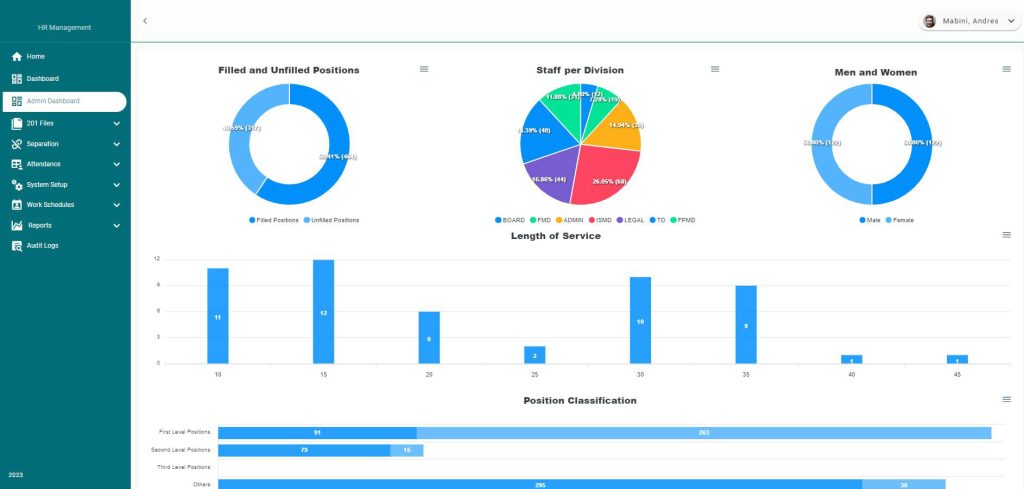
EACOMM has deployed custom HRIS and payroll systems for both corporate and government clients with thousands of users currently using our systems.
Is Custom Software Development Best for your New Project?

What are the factors to consider when opting for a custom-built software system versus purchasing off-the-shelf software?