The Truth About Vibe Coding (AI-Assisted Programming)

Vibe coding is an emerging software-development workflow that shifts the programmer’s role from writing every line of code to prompting and refining an AI assistant that generates code from natural-language descriptions. Coined by Andrej Karpathy in early 2025, the term refers to building, modifying, and debugging software code by conversing with an AI chatbot. In practice, developers describe high-level goals or functions in plain English, and a large language model (e.g. ChatGPT, GitHub Copilot, Amazon CodeWhisperer, etc.) produces code snippets or even full modules. For example, this Microsoft article notes that vibe coding is “opening the door to newcomers and freeing developers to move faster and experiment.” This is because the AI can handle tedious boilerplate tasks, allowing the human user to guide and review the output. In short, vibe coding treats AI as a “pair programmer”: the user remains responsible for testing and verifying the code, while the AI rapidly generates and refines it in a conversational loop. Benefits of Vibe Coding Drawbacks and Risks Despite the advantages, AI-assisted coding has important limitations and risks: When to Consider Vibe Coding Organizations should consider AI-assisted coding (“vibe coding”) in scenarios where the benefits outweigh the risks: When Not to Use Vibe Coding Despite its promise, vibe coding is not suitable for all contexts. Teams should not rely on AI generation for scenarios where correctness, security, or control are paramount: Our Assessment of AI-Driven Development Vibe coding is emerging as a powerful new paradigm in software development. It leverages generative AI to accelerate prototyping, reduce repetitive work, and make coding more interactive and intuitive. Industry studies show clear advantages, such as quicker review times and more code being produced, and more developers are using AI tools to try out new ideas quickly. At the same time, recent research highlights the limitations of this approach. AI-generated code can introduce bugs, security gaps, or architectural issues, and it may create long-term dependency, legal, or maintainability concerns. Vibe coding is most effective when rapid iteration and ideation are essential, but it still requires disciplined oversight, thorough testing, and the guidance of experienced engineers, particularly for systems where reliability is critical. At its current state, vibe coding does not replace human expertise. At EACOMM, with nearly 25 years of experience in custom software development, we view AI as a powerful assistant rather than a substitute for skilled engineers. It accelerates development, streamlines debugging, and enhances our workflow, but it delivers these benefits precisely because our developers have the knowledge and experience to guide, verify, and refine its output. Vibe coding amplifies expert capability; it does not remove the need for it.

Know How to Unlock Agentic AI with watsonx Orchestrate

Empowering Philippine Businesses to Work Smarter with Intelligent Automation Artificial Intelligence is changing how organizations operate and compete. In the Philippines, companies are beginning to move beyond experimentation and toward real, results-driven AI adoption. The challenge is knowing how to integrate AI into daily work without heavy technical complexity. IBM watsonx Orchestrate, delivered in partnership with EACOMM Corporation, provides a practical and scalable way to bring Agentic AI into business operations. It enables teams to create digital assistants, or AI agents, that automate routine work, respond to natural language commands, and learn from interactions. What Is Agentic AI? Agentic AI refers to AI systems that act as digital teammates. These agents can take initiative, make informed decisions, and perform tasks across systems — all while working alongside humans. They combine reasoning, automation, and conversational understanding to deliver measurable business results. For example, an HR agent can automatically prepare onboarding documents, a finance agent can generate monthly reports, or a customer-service agent can respond to client queries instantly. Introducing IBM watsonx Orchestrate IBM watsonx Orchestrate is a platform that helps businesses design, deploy, and manage these Agentic AI assistants. It connects with common enterprise tools such as email, calendars, CRM, and ERP systems, allowing AI to perform tasks across departments with little to no coding. Through watsonx Orchestrate, teams can: How to Use watsonx Orchestrate to Create Agentic AI Getting started with Agentic AI through watsonx Orchestrate is straightforward. The platform provides a guided interface for building and training agents without requiring advanced programming skills. 1. Identify a Workflow to AutomateStart with a task that is time-consuming but rule-based, such as sending follow-up emails, processing invoices, or tracking employee requests. You can select from numerous pre-built agents or customize/create new ones from templates or even from scratch with no-coding required. 2. Create an AI AssistantWithin watsonx Orchestrate, users can design a digital assistant by defining the goal, connecting data sources, and setting up actions the agent will perform. 3. Add Skills and IntegrationsSkills represent what the AI agent can do. For example, “schedule a meeting,” “generate a report,” or “analyze feedback.” These skills can be linked to external applications like Slack, Workday, or Salesforce. 4. Teach the Agent Context and WorkflowUsing simple prompts or templates, teams can train the agent to handle tasks based on specific business logic, ensuring it responds appropriately to real-world scenarios. 5. Test, Refine, and DeployOnce configured, the agent can be tested in real workflows. Over time, it learns from usage and can be refined to handle more complex tasks or integrate with additional systems. Use Cases for watsonx Orchestrate for Philippine Organizations IBM watsonx Orchestrate can deliver value across industries in the Philippines: Department Sample Agentic AI Application Human Resources Employee onboarding, leave tracking, and digital helpdesk Finance Invoice validation, report generation, and expense monitoring Procurement Supplier coordination, purchase order management Customer Care AI chat support, ticket routing, and agent assistance Sales Lead qualification, client follow-ups, and opportunity tracking Public Sector Citizen service portals, document automation, and case handling The EACOMM Advantage EACOMM Corporation, one of the Philippines’ most experienced enterprise software developers, provides end-to-end support for organizations implementing IBM watsonx Orchestrate. Our expertise covers: By combining IBM’s global technology leadership with EACOMM’s local development expertise, we ensure that every implementation delivers real business value. Unlock the Power of Agentic AI with watsonx Orchestrate Agentic AI is redefining the future of work. With IBM watsonx Orchestrate, Philippine organizations can automate complex tasks, improve employee productivity, and create intelligent workflows that scale effortlessly. Partner with EACOMM Corporation to unlock the full potential of Agentic AI and discover how watsonx Orchestrate can transform your operations today.
Bletchley Park: The Secret Birthplace of the Digital World

A Storied Beginning Perched near present-day Milton Keynes in Buckinghamshire, Bletchley Park began its life as a quintessential English country estate. The site boasts a long history—first mentioned in the Domesday Book of 1086—and saw a significant architectural reincarnation in the late 19th century. In 1883, financier Sir Herbert Samuel Leon acquired the property and transformed a modest farmhouse and prior structure into an eclectic mansion, blending Victorian Gothic, Tudor Revival, and Dutch Baroque styles. The resulting house featured asymmetrical layouts, ornate gables, sumptuous interiors, reproduction Jacobean ceilings, marble arches, and a ballroom—making it as peculiar as it was grand. Following Sir Herbert’s death in 1926, his widow, Fanny Leon, maintained the estate until 1937. A year later, in 1938, Hugh Sinclair, head of MI6, purchased the mansion and its 581-acre grounds—largely using his own funds—for £6,000. The location’s excellent transportation links—particularly its proximity to Bletchley railway station and the intersecting Varsity Line (linking Oxford and Cambridge)—made it an ideal site for what would become Britain’s wartime intelligence hub. From Country House to Intelligence Powerhouse As Europe braced for war, Bletchley Park rapidly evolved from a tranquil estate into “Station X,” the nerve center of British cryptanalysis. The Government Code and Cypher School (GC&CS) relocated to the mansion in August 1939. What began as a modest group of cryptanalysts—no more than ten in the early days—soon swelled into a sprawling network of huts, blocks, and support facilities across the grounds, running around the clock. By January 1945, during peak operations, nearly 9,000 personnel were working at Bletchley Park and its satellite outposts—about three-quarters of whom were women, primarily WRNS (Women’s Royal Naval Service) members who staffed the vital machinery and supporting functions. The sheer scale and secrecy of the site earned it the nickname the “intelligence factory,” where cryptographers, linguists, mathematicians, and countless support staff—toiled behind the scenes to reshape the outcome of the war. Innovating Victory: Bombe, Heath Robinson & Colossus Bletchley Park’s triumph was not only the result of brilliant minds but also of groundbreaking machines that pushed the boundaries of technology in their time. These innovations combined mechanical engineering, electrical ingenuity, and early computing theory to solve problems once thought impossible. The Bombe Designed by mathematician Alan Turing and refined by Gordon Welchman, the Bombe was an electromechanical device built to unravel the daily settings of the German Enigma machine. The Enigma’s complex system of rotating cipher rotors created billions of possible encryption combinations, making manual decoding impossible within operational timeframes. The Bombe automated the trial-and-error process, rapidly eliminating incorrect settings until the correct rotor positions were found. With multiple Bombes running simultaneously, Bletchley Park could break intercepted messages in hours rather than weeks—turning intelligence into actionable insight before enemy plans unfolded. The Heath Robinson While the Bombe was focused on Enigma, the Germans also used an even more complex cipher—Lorenz SZ 40/42, nicknamed “Tunny” by British cryptanalysts—for high-level communications between Hitler and his generals. To tackle this, engineer Frank Morrell and the Post Office Research Station built the Heath Robinson, a semi-automated machine that used synchronized paper tapes to compare intercepted cipher text with simulated key streams. Although ingenious, Heath Robinson was slow, mechanically unreliable, and prone to synchronization errors. Nevertheless, it laid the critical groundwork for what would become the world’s first electronic computer. The Colossus Recognizing Heath Robinson’s limitations, engineer Tommy Flowers of the General Post Office designed Colossus, a machine that replaced most mechanical parts with vacuum tubes for faster, more reliable processing. Completed in 1944, Colossus could process 5,000 characters per second and run complex statistical tests on encrypted messages. Its programmable nature—using switches and plugboards—made it the first digital electronic computer in history. Colossus reduced Lorenz message decryption from weeks to mere hours, providing Allied commanders with vital intelligence that influenced operations such as the D-Day landings. These three machines—Bombe, Heath Robinson, and Colossus—were more than wartime tools; they were the ancestors of modern computing. Each represented a leap forward in automation, cryptanalysis, and electronic engineering, establishing principles that underpin computer science, cybersecurity, and artificial intelligence today. The People Behind the Machines Bletchley Park’s success was not solely a triumph of technology—it was a testament to the determination, ingenuity, and collaborative spirit of its people. Roughly 75% of its workforce were women, many of them serving in the Women’s Royal Naval Service (WRENS) as operators of the Bombe and Colossus machines, as translators, clerks, and radio interceptors. These women formed the backbone of operations, ensuring that the painstaking work of deciphering enemy codes continued day and night. Alongside them were some of the greatest minds of the era—Alan Turing, Gordon Welchman, Max Newman, Bill Tutte, Joan Clarke, and others—whose organizational and cryptanalytic breakthroughs changed the course of history. Turning the Tide of War The decoding of Enigma and Lorenz messages didn’t just win battles—it saved lives. By gaining unprecedented visibility into German U-boat movements, weather operations, and strategic military plans, the Allies were able to anticipate enemy actions and mount effective countermeasures. Historians estimate that the work at Bletchley Park shortened the war by up to two years, preventing millions of potential casualties and reshaping the post-war geopolitical landscape. This was an extraordinary example of how innovation, when paired with dedicated teamwork, can alter the trajectory of history itself. Legacy & Relevance Today When Bletchley Park was finally decommissioned and its wartime secrets revealed in the mid-1970s, the world learned of a silent victory that had not only shortened the war but had also given birth to the foundations of modern computing, cryptography, and intelligence gathering. The work done here went far beyond breaking enemy codes—it pioneered the very concepts of algorithm design, machine logic, and human-computer interaction that underpin today’s software industry. Since becoming a museum and heritage center in 1994, Bletchley Park has hosted exhibitions such as the on-going “The Age of A.I.”, drawing direct parallels between wartime breakthroughs and today’s technological frontiers. Visionaries like Alan Turing, Jack Good, and Donald Michie moved from the heat of wartime
Agentic AI: This New Form of AI Doesn’t Need Prompts

As enterprises continue to digitize operations and seek intelligent automation, the concept of Agentic AI has emerged as a defining force in the next evolution of artificial intelligence. The 2025 ISG Buyers Guide: Agentic and Generative AI serves as a vital resource for understanding the rapidly growing ecosystem of software providers addressing this technological transformation. While generative AI (GenAI) has captured attention for its content generation capabilities, it is Agentic AI that promises to revolutionize how systems autonomously execute complex tasks in dynamic environments. What is Agentic AI? ISG Research defines Agentic AI as artificial intelligence capable of taking autonomous actions based on an understanding of its environment and specific goals. Unlike GenAI, which relies on prompts to generate responses, Agentic AI functions like a digital agent—perceiving, reasoning, and acting independently across software systems. This distinction marks a fundamental shift from passive AI interaction to proactive, goal-driven behavior, making Agentic AI indispensable for process automation, workflow management, and intelligent decision support. Agentic AI vs. Generative AI: Complementary, Not Competitive While Generative AI excels at producing content—text, images, code—based on user prompts, its effectiveness is limited by accuracy issues, commonly referred to as hallucinations. Enterprises have attempted to overcome these challenges by fine-tuning large language models (LLMs), incorporating Retrieval-Augmented Generation (RAG), and investing in prompt engineering. However, when operational outcomes depend on autonomous decision-making rather than static content generation, Agentic AI becomes the more appropriate model. Agentic systems go beyond language understanding to execute complex, multi-step actions. These systems often leverage Large Action Models (LAMs) or augmented LLMs trained on sequences of decisions and outcomes. As such, AI Agents represents a more advanced capability: a software agent that can function independently to meet enterprise objectives. Market Trends and the Rise of Agentic AI Platforms Driven by the need for intelligent automation and increased ROI, enterprises are increasingly adopting Agentic AI to enhance operational efficiency. According to ISG, a third of enterprises are already investing in AI-driven business process workflow management—an area where Agentic AI plays a leading role. At the same time, the cost of operating expansive GenAI models has prompted organizations to shift towards smaller, task-specific models. This pivot has also influenced the rise of “model gardens,” where a variety of AI models, including agentic architectures, are deployed and managed for specific use cases. LLMOps—extensions of MLOps tailored for LLMs—are further maturing to accommodate the unique demands of deploying Agentic AI, from lifecycle governance to performance monitoring. Evaluating Agentic AI: Methodology and Key Leaders The ISG Buyers Guide introduces a structured, criteria-driven approach for evaluating software providers based on their Agentic AI capabilities. Enterprises are encouraged to assess platforms across five product experience dimensions—capability, adaptability, usability, manageability, and reliability—as well as customer-focused metrics like TCO/ROI and solution validation. Google Cloud, Oracle, and IBM lead the pack in providing comprehensive support for Agentic AI, scoring highly on both technical and customer experience metrics. Their platforms exhibit strong agentic capabilities, supported by robust model orchestration, developer tooling, and integration with enterprise workflows. Other notable players such as Databricks, Microsoft, and AWS have also made significant strides, offering modular toolsets that support the development and deployment of autonomous agents. ISG’s quadrant classification—Exemplary, Innovative, Merit, and Assurance—further contextualizes the maturity and enterprise fit of each provider. Strategic Implications of Agentic AI for Enterprises Deploying Agentic AI is not merely a technological choice but a strategic imperative. Autonomous agents hold the potential to reduce operational overhead, improve decision accuracy, and enable real-time responsiveness in complex business environments. However, effective adoption requires a systematic approach, including: As with any enterprise investment, the fit between a provider’s offerings and organizational needs is paramount. Overly complex systems may introduce implementation risk, while insufficient agentic functionality may limit return on investment. Unlocking Agentic AI’s Potential in the Philippines The 2025 ISG Buyers Guide highlights Agentic AI as a transformative force in enterprise technology—and its implications for the Philippines are particularly significant. As the country continues to position itself as a digital innovation hub in Southeast Asia, the adoption of Agentic AI presents a strategic opportunity to enhance competitiveness across both the public and private sectors. With a thriving business process outsourcing (BPO) industry, a rapidly growing digital economy, and increasing government investment in smart governance, the Philippines is uniquely positioned to benefit from the autonomous capabilities of AI Agents. From automating repetitive workflows in contact centers to enabling intelligent public service delivery and accelerating digital transformation in SMEs, Agentic AI can drive operational efficiency, reduce human error, and expand access to services across geographically distributed regions. Among the global leaders in this field, IBM’s watsonx platform has been recognized in the ISG Buyers Guide as a top performer in both product and customer experience. With robust capabilities in natural language processing, model governance, and enterprise-ready AI deployment, watsonx offers a comprehensive toolset for building, training, and deploying agentic systems tailored to mission-critical use cases. Its emphasis on transparency, accuracy, and responsible AI aligns with the needs of organizations seeking both innovation and compliance. Contact EACOMM about Agentic AI Today To harness the full potential of IBM watsonx and accelerate Agentic AI adoption in the Philippines, organizations are encouraged to partner with EACOMM Corporation—a trusted leader in local digital transformation. As an IBM business partner with deep expertise in AI integration and enterprise systems development, EACOMM Corporation is uniquely equipped to guide businesses and government institutions in deploying watsonx to meet their strategic objectives. For consultation, implementation, and training services related to IBM watsonx and Agentic AI solutions in the Philippines, Contact EACOMM Corporation Today and take the first step toward building an autonomous, intelligent, and future-ready enterprise.
Generative Edge AI: The next frontier for AI Tech

Generative Edge AI’s Arrival An interesting crossroad is currently being crossed in Information Technology where computer, smartphone, and tablet hardware are becoming more and more powerful and at the same time, Generative AI algorithms, that previously needed multiple, powerful servers to run, are becoming more resource-efficient. Famously, China’s DeepSeek purportedly matches or even outshines OpenAI’s GPT models and was done at a fraction of the hardware resources. Already available are smaller versions of large language models (LLMs) that can be deployed on desktops, smartphones, and even single-board computers like Raspberry Pi. As these technologies improve, instead of having dependency on a cloud-based AI model, software applications will start having their own embedded generative AI models that will run independently of the cloud. This article will explore the potential that these solutions can provide. What is Edge AI? Edge AI refers to artificial intelligence models and algorithms that run on local devices rather than relying on cloud-based processing. This paradigm shift allows AI to function closer to the source of data generation, reducing latency, enhancing privacy, and improving real-time decision-making. Edge AI has been around for several years, with applications in various fields such as surveillance cameras with license plate recognition, AI-assisted driving, industrial automation, and healthcare wearables that analyze biometric signals in realtime. The core advantage of Edge AI is its ability to function independently of internet connectivity, making it suitable for critical applications that require low-latency responses and high reliability. Moreover, as hardware capabilities continue to improve, the scope of Edge AI applications is expanding, paving the way for a new frontier: Generative Edge AI. What is Generative Edge AI? Generative Edge AI is the integration of generative AI models with edge computing devices, enabling local devices to create content, synthesize information, and generate human-like text, images, code, or audio without the need for continuous cloud access. Unlike traditional Edge AI, which is primarily focused on inference and pattern recognition, Generative Edge AI brings creativity and contextual understanding to local devices. With advancements in model optimization techniques such as quantization, pruning, and knowledge distillation, modern generative models can now fit within the limited computational and memory constraints of edge devices. This evolution makes it feasible for smartphones, IoT devices, and embedded systems to generate complex outputs without relying on cloud-based models. Advantages and Uses of Generative Edge AI 1. Reduced Latency and Real-time Performance Since Generative Edge AI operates locally, it eliminates the delay associated with cloud-based AI processing. This is particularly useful for applications requiring immediate responses, such as voice assistants, augmented reality (AR) overlays, and AI-powered creative tools. 2. Enhanced Privacy and Security One of the biggest concerns with cloud-based AI solutions is data privacy. Generative Edge AI keeps sensitive data on local devices, minimizing the risk of data breaches, unauthorized access, and regulatory compliance issues. This is crucial for industries like government, healthcare, finance, and defense, where confidentiality is paramount. 3. Offline Functionality By removing dependence on an internet connection, Generative Edge AI ensures continuous operation even in remote areas or in cases of network disruptions. This makes it invaluable for field applications such as disaster response, military operations, and rural healthcare diagnostics. 4. Cost Efficiency Cloud-based AI incurs significant costs related to data transmission, cloud storage, and processing power. Generative Edge AI reduces these operational expenses by leveraging local processing, making AI-driven applications more affordable and sustainable. 5. Industry Applications Generative Edge AI has a wide array of use cases, including: Currently Available LLMs for Generative Edge AI Several open-source LLMs have been optimized for deployment on edge devices (often referred to as Small Language Models or SLMs), including: EACOMM’s Current Efforts in Generative Edge AI EACOMM is actively researching and developing solutions that integrate Generative Edge AI into business and industrial applications. We are developing prototypes and proof-of-concepts for custom-built Generative AI Assistants that can be deployed directly on desktop PCs, smartphones, or other edge devices. These assistants eliminate reliance on cloud infrastructure, ensuring seamless functionality even in environments with poor internet connectivity while significantly reducing security and privacy risks associated with transmitting sensitive data to external servers. A notable project currently in active development for an educational client is a Retrieval-Augmented Generation (RAG) system that seamlessly integrates enterprise-grade search engines with generative AI models. This system allows users to query internal databases and receive AI-generated responses enriched with contextual data, providing more accurate and relevant information. Designed to be hosted entirely on-premise, this solution runs efficiently on standard virtual machines without the need for GPUs and can even be installed on a standalone desktop PC. By keeping all operations within the local infrastructure, the system addresses key concerns related to data privacy, regulatory compliance, and unreliable internet access—critical factors for educational institutions handling sensitive student and faculty information. What the Future Holds As Generative Edge AI continues to evolve, we can expect groundbreaking developments that will redefine how we interact with technology. The proliferation of efficient AI chips and AI-ready computers and smartphones from the likes of Apple, Nvidia, and Qualcomm, coupled with further advancements in model optimization, will make generative AI a standard feature in personal devices. Future innovations could include: The potential of Generative Edge AI is vast, and as hardware and AI models continue to improve, we are on the brink of a new era where intelligent, creative, and autonomous AI solutions become an integral part of everyday life. EACOMM remains committed to pioneering this transformation, ensuring that businesses and consumers alike can harness the full power of Generative Edge AI.
Improved Customer Service with the latest in AI Insights

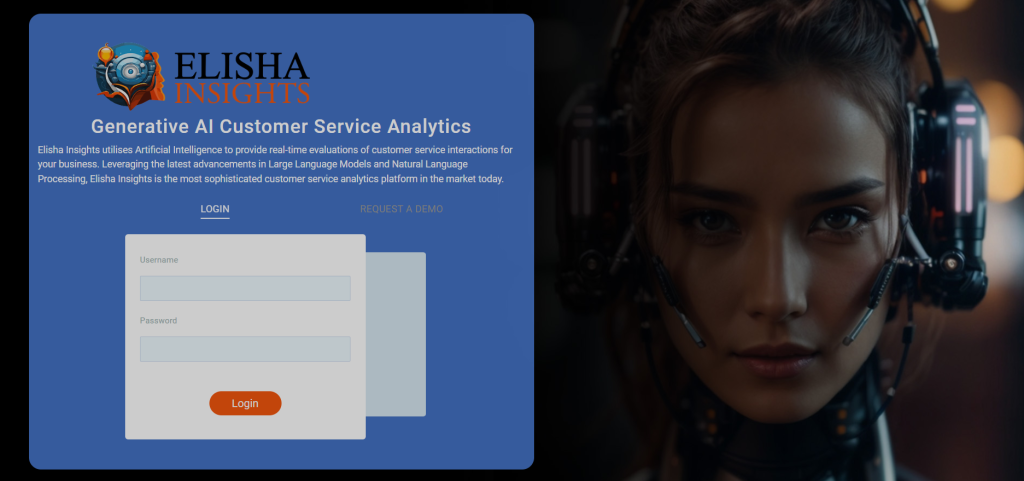
In today’s fast-paced business world, delivering exceptional customer service is a key differentiator. To empower organizations in this critical area, Elisha Insights combines cutting-edge Artificial Intelligence (AI) and Natural Language Processing (NLP) technologies, providing real-time analysis of customer interactions. With its sophisticated platform, Elisha Insights is setting a new benchmark in contact center analytics. What is Elisha Insights? Elisha Insights is a comprehensive analytics solution designed to evaluate customer service interactions seamlessly. By processing video, audio, or text data through its proprietary Generative AI engine, it delivers actionable insights in near real-time. The platform’s ability to perform qualitative and quantitative analysis makes it an indispensable tool for enhancing customer satisfaction and operational efficiency. Key Features Why Choose Elisha Insights? Elisha Insights is more than a tool; it’s a strategic partner for businesses aiming to elevate their customer service experience. By leveraging advanced analytics, companies can transform their contact centers into hubs of excellence. For more information, visit Elisha Telecom or contact sales@elishatelecom.com
Chaital AI Chatbot at One: New Features and Real-World Applications

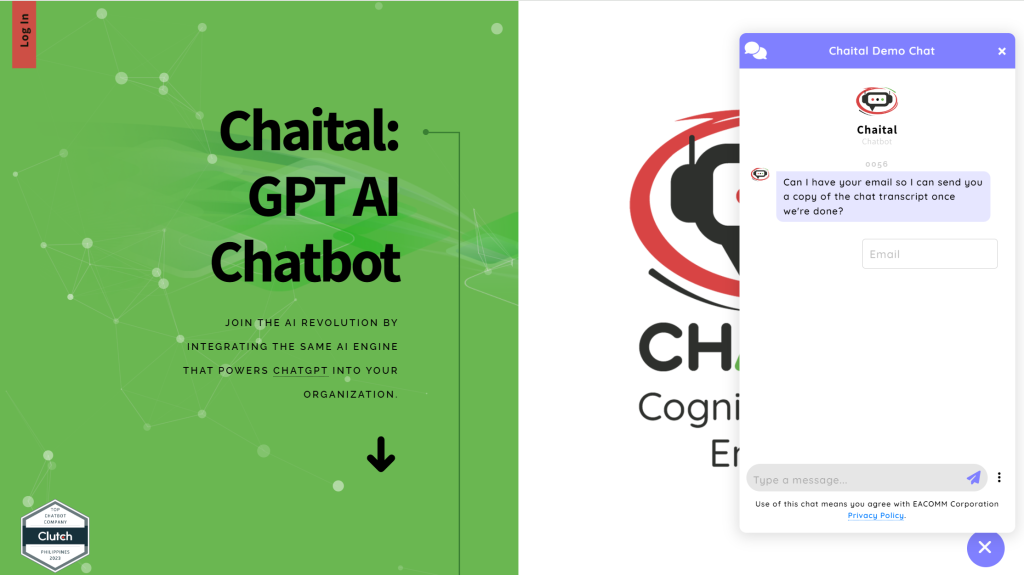
As Chaital marks its first anniversary, we reflect on a year of innovation, growth, and success. Since its launch, Chaital has rapidly become an invaluable asset for organizations across various industries, showcasing its flexibility and effectiveness in streamlining communication and improving processes. From driving significant sales growth to assisting in complex system operations, Chaital’s impact has been profound. This milestone marks not just a year of service, but a year of empowering organizations to harness the power of AI-driven communication in ways that were previously unimaginable. How Organizations are using Chaital The variety of use cases we’re seeing from our clients is a testament to how flexible and useful Chaital can be. Here are a few examples of how Chaital has helped our clients simplify and improve their work processes. Facebook and Website Sales Assistant Most of Chaital’s clients use it as a frontline assistant for general questions about an organization’s products and services. Configured properly, Chaital can not only answer queries but actually close sales. One of our clients, for example, has seen close to 50% growth in sales from leads generated via Facebook Messenger by allowing Chaital to instantly address potential customers’ queries, whereas before it took them a few hours or even days to respond. System User Assistant One of the first deployments of Chaital was as an assistant in utilizing a complex integrated sales and customer relationship management system for a Philippine distribution company. Trained using the system’s extensive user manual, system users now only need to ask the chatbot how to do specific tasks, and Chaital will provide a step-by-step answer supported by screenshots and relevant links. Exam and Activities Maker Academ-e Multi Media has always been on the cutting edge of technology when it comes to deploying its learning content. When Academ-e was initially developing its content in 2020, EACOMM provided a custom text-to-speech engine capable of both Filipino and English voices to rapidly accelerate its video production process. With the advent of Generative AI last year, EACOMM offered Academ-e a heavily customized version of Chaital trained on content developed by Academ-e’s esteemed learning content developers and editors to rapidly develop exam questions and class activities for the over 1,300 learning modules that Academ-e produces. Research Assistant Chaital’s Generative AI has proven to be a very useful tool in qualitative research. For over a year now, Chaital has been helping professors from the University of the Philippines transcribe, summarize, and analyze research data from interviews and written surveys. Legal Guidance Philippine government agencies have deployed Chaital as a guide and assistant to help stakeholders understand complex and intricate government regulations. Chaital can be trained by uploading citizen charters, memorandum circulars, legal decisions, and the like to allow it to answer questions in an understandable and accurate manner. Chaital Features Due to the rapid pace of generative AI development over the past year, EACOMM is working hard to ensure Chaital’s features and capabilities are in line with what the latest technologies have to offer. Below is a summary of Chaital’s current features and capabilities. Seamless Integration Easily embed Chaital into one or more websites by simply copying and pasting the chat code. Integrate with your preferred chat engine, whether it’s LiveChat, Facebook Messenger, Viber, or another platform of your choice. Multilingual Capabilities Converse in English and over fifty other languages, including Filipino and some native dialects, ensuring accessibility and inclusivity for diverse audiences. Rich Media Support Enhance interactions by allowing the chatbot to post relevant photos or videos directly within the chat, making conversations more engaging and informative. Intelligent Messaging Utilize manual and AI-generated trigger messages to guide users through their journey, ensuring they receive timely and relevant information. Extensive Training Data Benefit from up to 1GB of text-based training data, allowing Chaital to learn and adapt to your specific organizational needs. Chaital can even crawl your web pages and databases to provide real-time, automated training of your chatbots. Unlimited Chatbots Deploy as many chatbots as your organization requires, each tailored to different aspects of your business, whether for customer support, sales, training, etc. Comprehensive Analytics Access detailed dashboards and reports that provide insights into chatbot performance, user interactions, and overall effectiveness. Chat History Management Easily search and filter chat histories by webpage/channel, date range, and more, with one year of storage included. As Chaital continues to evolve and expand its capabilities, the possibilities for enhancing communication and streamlining operations are limitless. Whether you’re looking to boost customer engagement, improve internal processes, or explore new AI-driven innovations, Chaital is ready to help your organization achieve its goals. Don’t miss the opportunity to experience the transformative power of Chaital—contact EACOMM Corporation today to learn how you can integrate this cutting-edge solution into your business strategy. Email info@eacomm.com or call us at +632 7217 0372.
Happy New Year! A Preview of Generative AI in 2024

As EACOMM bids farewell to another year and steps into the uncharted territory of 2024, it’s a perfect moment to reflect on the strides we’ve made in the realm of generative artificial intelligence (AI) and cast our gaze toward the exciting developments that lie ahead. The past year has been a testament to the incredible potential of AI, and 2024 promises to be a groundbreaking chapter in the evolution of generative AI technology. A Year of Achievements and Progress Before we delve into the future, let’s celebrate the milestones achieved in 2023. By using tools from Openai, Midjourney, Stability, IBM WatsonX, Google, and more, generative AI has continued to push the envelope of what is possible. From generating human-like text to aiding in creative endeavors, the applications have been vast and transformative. In 2023, we witnessed advancements in natural language processing, image generation, and even music composition, showcasing the versatility of generative AI. Businesses embraced AI-driven solutions to streamline processes, and creative professionals found new avenues for inspiration. Generative AI in 2024 1. Enhanced Understanding of Context: As we move into 2024, expect generative AI to demonstrate a deeper understanding of context. AI models will become more adept at grasping nuanced conversations, resulting in more accurate and contextually relevant responses. This development is poised to improve user experiences across various applications. 2. Ethical AI and Responsible Innovation: The ethical considerations surrounding AI will take center stage in 2024. There will be increased emphasis on responsible AI development, with a focus on minimizing biases and ensuring transparency. As the technology matures, the industry will continue to grapple with questions of ethics, privacy, and accountability. 3. Interdisciplinary Collaborations: The synergy between generative AI and other disciplines will become more pronounced in the coming year. Expect to see collaborations between AI researchers, artists, writers, and scientists, leading to innovative projects that blend creativity and technology in unprecedented ways. 4. Customizable AI Solutions: In 2024, we anticipate the emergence of more customizable AI solutions. Businesses and individuals will have the ability to tailor AI models to their specific needs, enabling a more personalized and efficient integration of generative AI into various workflows. 5. Advancements in Multimodal AI: The integration of multiple modalities—text, image, and possibly even audio—will be a key focus in 2024. This will open new possibilities for creative expression and problem-solving, as AI models gain the ability to understand and generate content across different formats. Embracing the Future with Optimism As we usher in the new year, let’s approach the future of generative AI with optimism and a commitment to responsible innovation. The potential for positive impact is immense, from revolutionizing industries to fostering new forms of artistic expression. EACOMM can help you embark on a journey into 2024, where the boundaries of what’s possible continue to expand, driven by the ever-evolving capabilities of generative artificial intelligence. EACOMM Corporation wishes you a Happy New Year filled with innovation, creativity, and the boundless possibilities of the AI-powered future!
A look into Santa Claus and his New Generative AI-powered Workshop

2023 has been a breakout year for generative AI technologies, and as the Holiday Season falls upon us, we can’t help but think about how Santa and his helpers are utilizing AI to help improve the efficiency of his factory up in the North Pole. Naughty and Nice List Generator With AI’s ability to detect sentiment and intent, we won’t be surprised if Santa is using it to analyze children’s behavior and generate his Naughty and Nice List with improved accuracy. Gift Recommendation System Santa can use generative AI to analyze the wish lists of children worldwide and generate personalized gift recommendations based on their interests, age, and behavior throughout the year. This could help Santa create a more customized and enjoyable gift-giving experience. Generative AI Toy Designer Santa can use generative AI image generation technologies to help his elves design new toys that he can 3D print in his workshop. Generative AI Personalized Christmas Cards Expect more insightful and touching letters from Santa this Christmas as he makes use of LLM and generative AI to automatically write Christmas cards for you and your family. Route Optimization Santa might just finish his rounds earlier than usual this year as he utilizes AI to optimize his delivery routes across the globe. EACOMM has dedicated much of 2023 to developing software that taps generative AI to create software tools for its partners and clients similar to what Santa may have installed in his workshop. In June, EACOMM released the Chaital Generative AI-powered Chatbot, now being used not only as a website and Facebook Messenger chatbot but also as an automated tech support and help desk assistant built into software systems deployed with our clients. Running for several months now is a system developed for Google Maps that uses generative AI to detect and categorize social media posts from Metro Manila’s light rail providers and convert them to GTFS-RT service alerts. The second half of the year saw the prototype release of Elisha Insights, Elisha Telecom’s flagship AI analytics system that automates quality assurance and compliance monitoring in contact centers. Elisha Insights is currently being piloted in several large contact centers in the Philippines and the United Kingdom, with an imminent production release in January 2023. Nearing completion is a multi-media workflow manager for our partner Academ-e that would radically accelerate its production process for the upcoming MATATAG Curriculum transition. Through the use of generative AI, the workflow manager automates video asset creation, text-to-speech, and event development of storyboards and quizzes. 2024 should be an even more exciting year for generative AI as it further improves and matures and as companies find more and more use cases for this transformative technology.
EACOMM presents new AI technology at the 2023 Procurement Summit

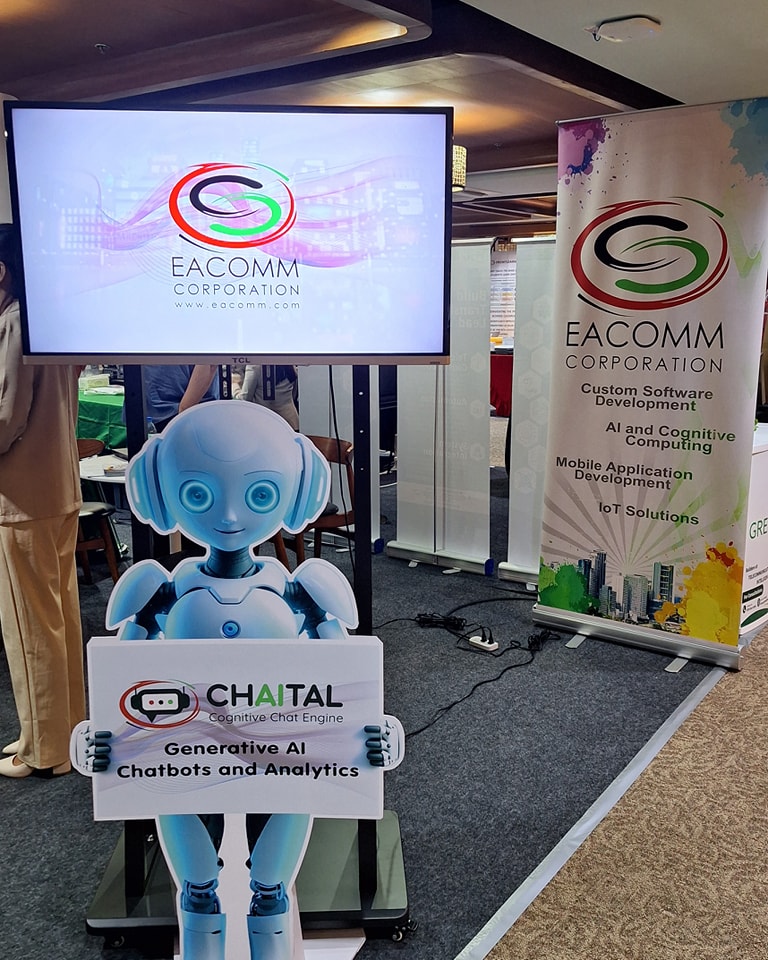
EACOMM Corporation, a leading Filipino-owned custom software developer specializing in AI technology, IoT, web, and mobile applications, was honored to be invited to participate at the recently concluded 2023 Philippine Procurement Summit, held on October 23–24, 2023, at the Philippine International Convention Center and organized by the Government Procurement Policy Board Technical Support Office (GPPB-TSO). The event revolved around the theme “Building a Cadre of Procurement Professionals as Catalysts for Innovation and Competitiveness.” The Philippine Procurement Summit is an annual event that serves as a platform for government procurement practitioners and suppliers to converge, exchange knowledge, and explore innovative strategies to transform the procurement landscape. The summit’s focus on building a cadre of procurement professionals reflects the desire to equip participants with the skills and insights needed to drive innovation and enhance competitiveness within their organizations. EACOMM Corporation seized this opportunity to demonstrate its expertise in the field of AI technology and its transformative potential for government services. Senior System Architect Karlo Martin Robosa delivered a presentation on various AI-related projects undertaken by EACOMM over the past decade, with an emphasis on generative AI use cases in the Philippines, particularly in government. During his presentation, Mr. Robosa shed light on EACOMM’s ongoing and past AI projects, including chatbots, analytics, machine learning, and IBM Watson integrations. The 2023 Procurement Summit was an enriching and inspiring event, and EACOMM Corporation is proud to have been part of this gathering of professionals who are committed to advancing the field of procurement. The summit demonstrated the transformative power of procurement in driving innovation and competitiveness, ultimately shaping the future of government operations and supplier relationships. Inquire now about how AI technology can be used for your business. EACOMM offers free consultations, demonstrations, and presentations to key stakeholders to better understand AI technology and how it can be used in both public and private organizations.
Generative AI Technology: A New Breakthrough for Customer Service

Artificial Intelligence (AI) has evolved significantly, with Generative AI technologies like ChatGPT, MidJourney, DALL-E, and Bard gaining global attention. Generative Artificial Intelligence creates novel content based on its training, revolutionizing accessibility and applications of AI. It has transcended from a niche tool for data-rich organizations to a universally applicable solution, benefiting students, designers, and office workers alike. Generative AI’s potential is particularly promising for customer service. Unlike rule-based chatbots, it comprehends context, learns from data, and produces human-like, tailored responses for each customer. Personalized Interactions: Generative AI refines its responses as conversations progress, leveraging customer information for personalized suggestions. For instance, a retail customer querying a previous purchase receives suggestions based on order history, enhancing cross-selling. 24/7 Global Availability: Generative AI overcomes temporal and linguistic barriers, catering to global customers 24/7 in their native languages. This unlocks new markets and expands business horizons. Handling Complex Interactions: Generative AI learns from extensive data, adeptly managing intricate customer scenarios. Its continuous learning improves responses, enabling it to address nuanced queries effectively. Unlike scripted chatbots, Generative AI gauges intent, mood, and conversation flow, automatically escalating to human agents if needed. Limitations and Solutions Generative AI Customer Service Solutions that are available in the Philippines Chaital GPT AI Chatbot: Chaital is a powerful GPT-based chatbot that can handle conversations and interactions via your website, Facebook messenger, Viber, SMS, etc. Training is easy and can integrate directly with your website content or database. Elisha Insights is an AI-driven Customer Service Analytics engine that automatically classifies interactions, analyzes sentiment, and evaluates customer interactions using customizable performance metrics. Both solutions seamlessly integrate with existing systems and offer flexible billing options, ensuring that businesses can harness the power of AI for elevated customer service.
Academ-e will be ready for the new DepEd MATATAG Curriculum

Academ-e Multi Media Solutions Inc. is planning to ensure that its next-generation Digital Learning Materials will be ready and compliant with the DepEd MATATAG Curriculum come next school year. Academ-e’s Primary Interactive (PI) Learning System provides Grades 1-6 students in the Philippines with a multi-modal and highly interactive alternative to traditional textbook-based learning. As Academ-e’s Technology Partner, EACOMM works hand-in-hand with Academ-e’s esteemed content editors and authors to utilize the latest in AI and multimedia technologies to create world-class digital learning materials for Filipino elementary school students. A Digital Textbook Alternative Academ-e’s digital learning materials are tailored to the Department of Education’s Elementary Curriculum. Gone are the days when students needed to purchase and bring heavy textbooks to school. Each learning topic is provided with interactive videos, printable teacher and student learning guides, and performance assessment tools. Teachers are no longer burdened by the need to prepare lesson plans and presentation materials, as Academ-e provides them all. The PI Learning System is designed to be deployed in a variety of teaching modalities. There are interactive videos that can be viewed online or offline, printable handouts and quizzes, as well as the option to deploy all content via a learning management system that can be deployed on-premise or in the cloud. Academ-e Digital Learning Content is available for the following subjects for Grades 1-6: Proven to Improve Student Engagement and Learning Outcomes Academ-e has been in use by private schools since SY2020-2021. Comparative analysis of student grades pre-utlization of Academ-e content against during utilization of Academ-e content has shown time and again an improve of student grades. In early 2023, Academ-e content was tested for feasibility of use in public schools. Across three public schools where Academ-e learning materials were deployed, teachers surveyed observed across the board improvement in student engagement and performance. Suddenly, students were eager to go to school to watch the next interactive video lesson. Ready your school for the MATATAG Curriculum Find out how your school can painlessly transition to the MATATAG Curriculum with Academ-e’s textbook-free, digital mode of learning. Contact Academ-e to schedule a presentation with your teachers and parents today.